POWER TRANSFORMER TESTING
Power transformer testing ensures the efficiency, safety, and reliability of transformers by detecting faults, verifying insulation integrity, and preventing costly failures in electrical systems.
TRANSFORMER SAFETY
- Monitor your transformer before it is installed, for any burning smell, cracked or unsuitable power cords or plugs and loose or misaligned parts.
- Regularly inspect your transformer to minimise system failures or breakdowns.
- When any work is performed on the transformer, it should be done when the equipment is de-energised, tagged out and the circuit should be shut down.
- Remain cautious of system overloading.
- An individual working with transformers should be using protection equipment specifically rated for the transformer’s voltage output.
- The overcurrent protection should be maintained at the correct level as per the equipment standards.
- Always ensure that your transformer is grounded. Transformer grounding removes any static charge which would otherwise accumulate.
- Be sure to take note that power source for control circuits will still be on even after interlocks on equipment disconnect.
- Make sure no spare nuts, tools or any foreign objects fall onto or into the transformer.
POWER TRANSFORMER ROUTINE TESTS
Regularly performing a range of standard tests has proven an effective way to gain reliable insight into the operating condition of your transformer and can extend its lifespan. Mechanical changes to winding, contact problems in tap changer or at other connections, shortened windings/coils, as well as interruptions or short-circuits of parallel lines can all be diagnosed early by using conventional testing methods.
ELECTRICAL TRANSFORMER MAINTENANCE
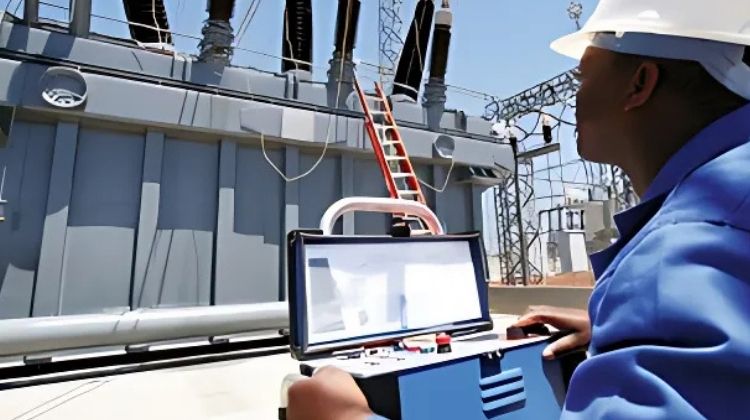
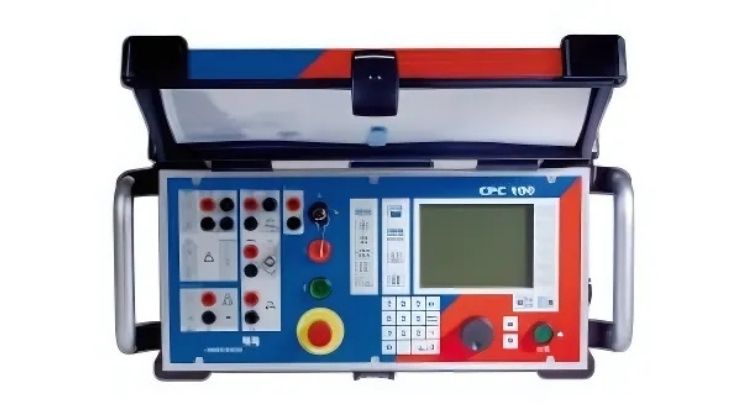
Okusha Engineering has the equipment, skills and expertise to perform protection maintenance by means of Primary injection testing using Omicron test equipment. Namely the Franeo 800 and CPC 100.
Our accurate testing ensures system reliability and compliance with industry standards.
BUSHING TEST (TAN/DELTA TEST)
Capacitance and power factor/dissipation factor (PF/DF) measurements are performed to investigate the condition of the insulation of power transformers and bushings. Both insulation systems are essential for the reliable operation of the transformer.
SWEEP FREQUENCY RESPONSE ANALYSIS
Frequency response analysis is a powerful, sensitive method for testing the mechanical integrity of transformer cores, windings and press frames, in power transformers. The test should be performed as a base line fingerprint at the factory which can then be used for comparison following installation, commissioning, maintenance and large disturbances.
DISSOLVED GAS ANALYSIS
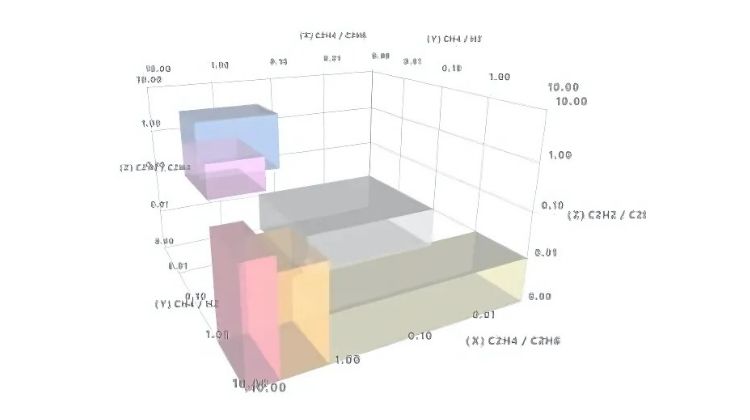
Determining the moisture content within the dielectric insulation is a very important way for assessing the reliability and lifetime of a transformer. While conventional methods are very inexact, our test systems use the latest graphic visualisation software and standards to analyse the PCB, CO2/CO, O2/N2 and C2H2/H2 levels with industry standards in an easy to interpret report.
NEGATIVE INFLUENCES ON A TRANSFORMER’S LIFE EXPECTANCY
-
Thermal Influences – Overload, overheating, and adverse ambient conditions.
-
Aging – Caused by moisture, acids, oxygen exposure, contamination, and leakages.
-
Mechanical Influences – Includes transportation damage, short-circuit stresses, and seismic activity.
-
Electrical Influences – Such as switching surges, lightning, overvoltage, and short-circuit currents.
-
Protection Issues – Underperformance or complete failure of protection systems.
TESTING AND CORRECTIVE MEASURES TO EXTEND TRANSFORMER’S LIFE EXPECTANCY
-
Maintain Auxiliary Components – Including tap changers, cooling systems, and breathers.
-
Reconditioning of Insulation – Through drying, oil treatment, or complete oil replacement.
-
Replace Parts – Such as bushings, surge arresters, gaskets, pumps, and fans.